Stories, reviews, and care for the birds that use the yard.
Feeder & Seed Guide
Which seed, which feeder, where to put it, and how to wash it. The notes below are from the Project FeederWatch handbook. This page is not a product list, and it has no prices.
Seed
Seed
What the handbook says
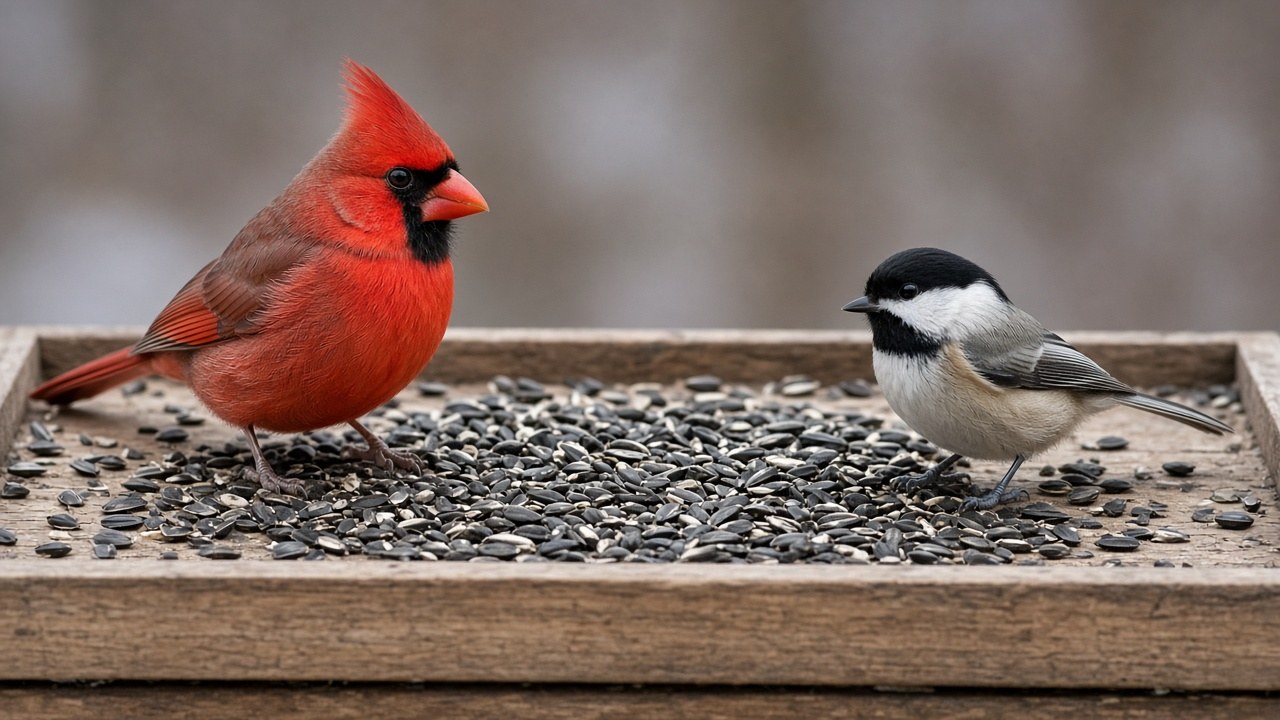
Black-oil sunflower
The best all-around seed in most places. It is high in fat, and the shell is thin enough for small birds to crack. Striped sunflower is larger and has a thicker coat.
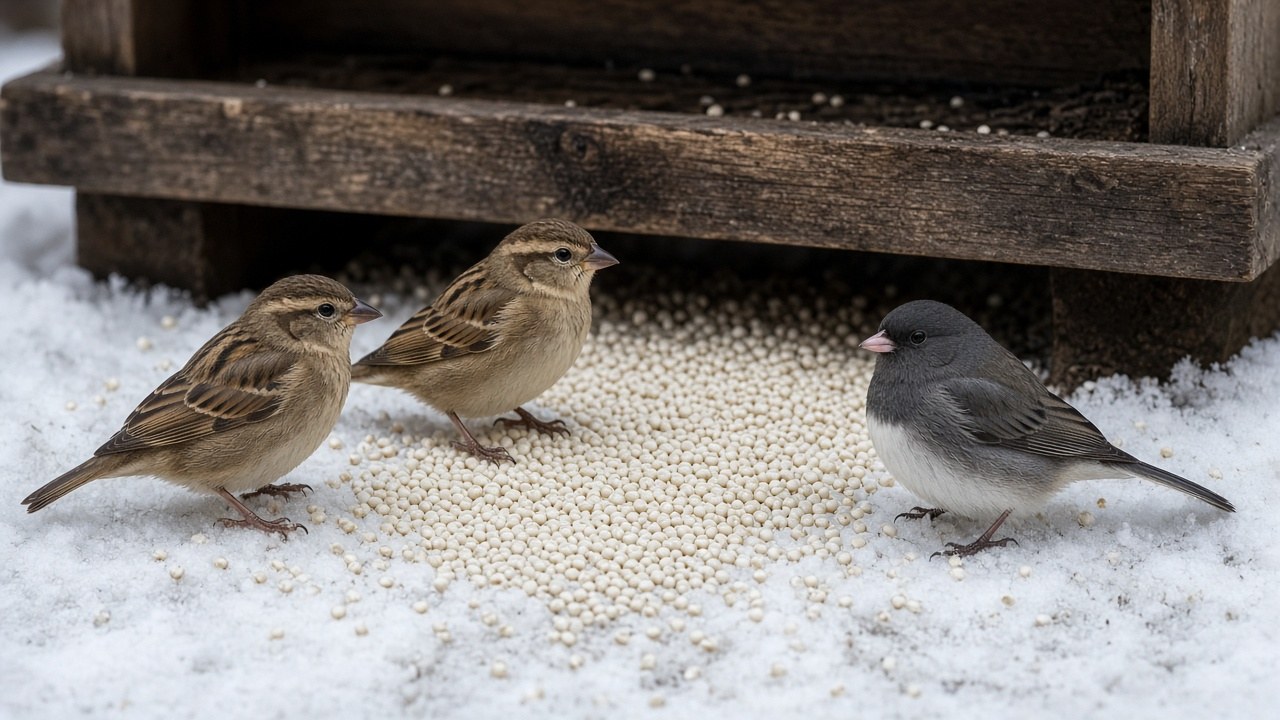
White millet
A favorite of sparrows and other birds that feed on the ground. A platform set near the ground is where the handbook expects juncos, doves, and sparrows.
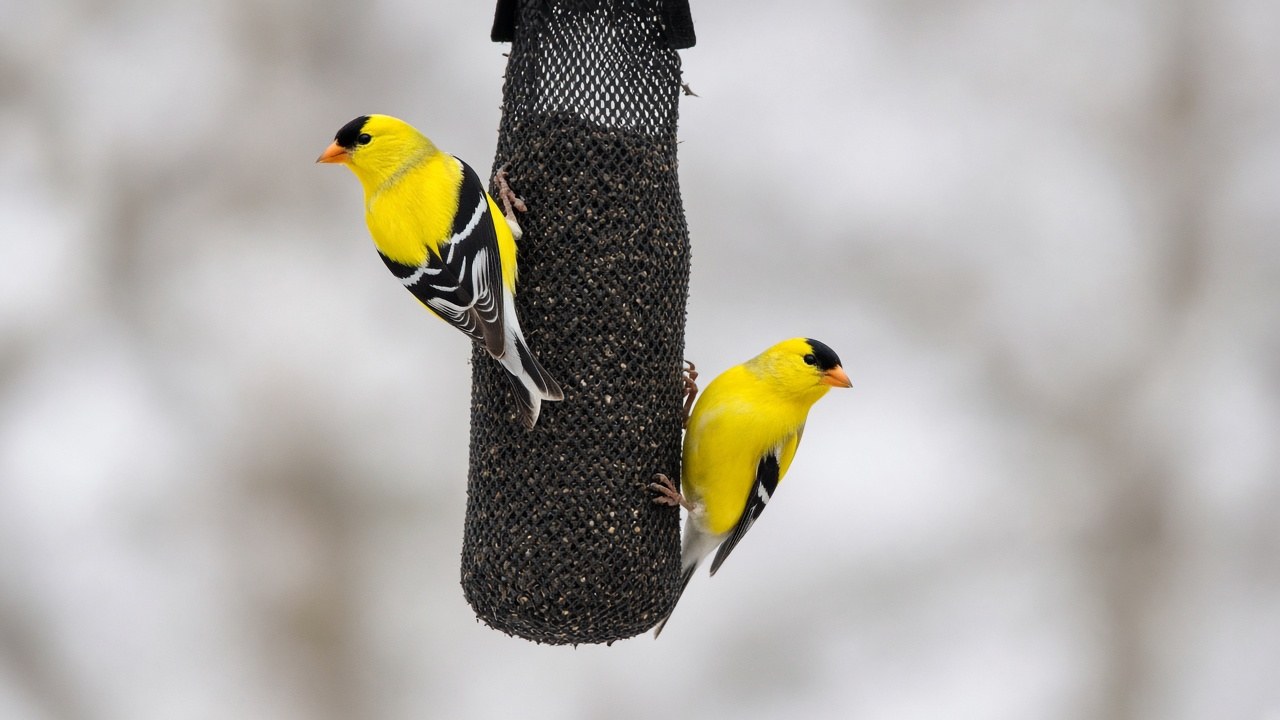
Nyjer
Also called thistle, and a favorite of small finches. It needs a feeder with small ports. A disposable sock is one way to offer it.
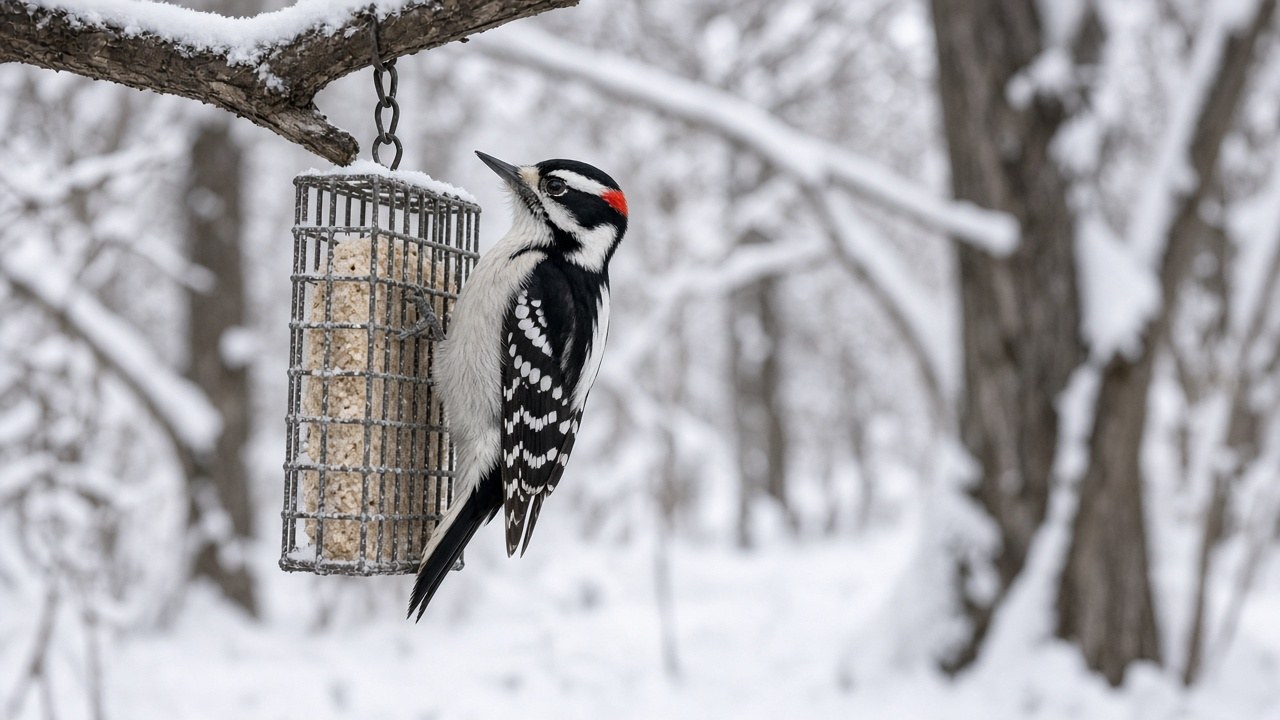
Suet
A good choice for insect-eating birds. A cage open only at the bottom tends to keep starlings off it and still lets woodpeckers, nuthatches, and chickadees feed.
Feeders
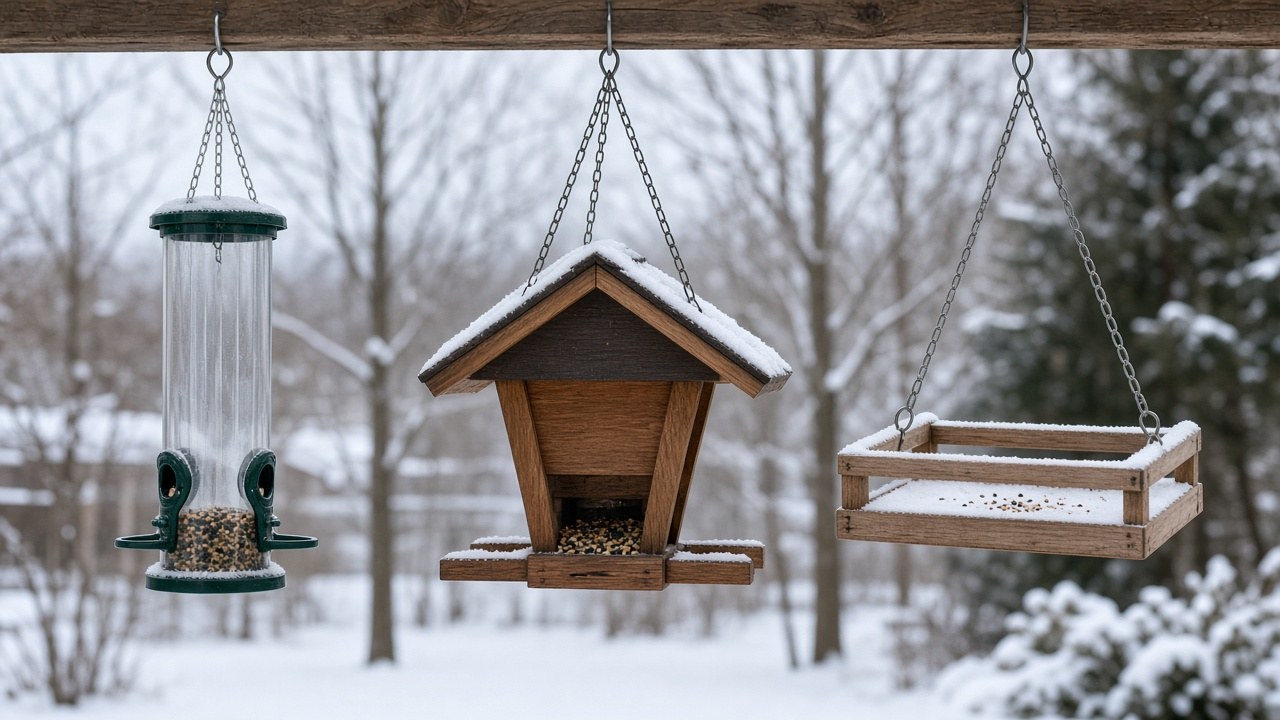
AI-generated image. A tube, a hopper, and a platform.
Feeder
What the handbook says
Tube
A hollow cylinder with ports and perches. It keeps seed fairly dry. Short perches suit small birds such as finches and leave off larger birds such as grackles and jays. Port size follows the seed.
Hopper
A platform with walls and a roof. It holds a quantity of seed and draws most feeder birds. Few hoppers are truly weatherproof, so seed that sits can get wet and mold.
Platform
Any flat raised surface. It needs drainage holes. A roof helps keep the seed dry. It draws the widest mix of birds. Set near the ground, it is the junco, dove, and sparrow feeder.
Nectar
One part sugar to four parts boiling water, cooled before it goes in the feeder. A slightly thinner mix, one part sugar to six parts water, is the oriole version. No red dye, no honey, and no artificial sweetener. Wash the feeder and change the nectar every three to five days. The same handbook, in its winter cleaning notes, says every two to five days depending on the temperature.
Placement
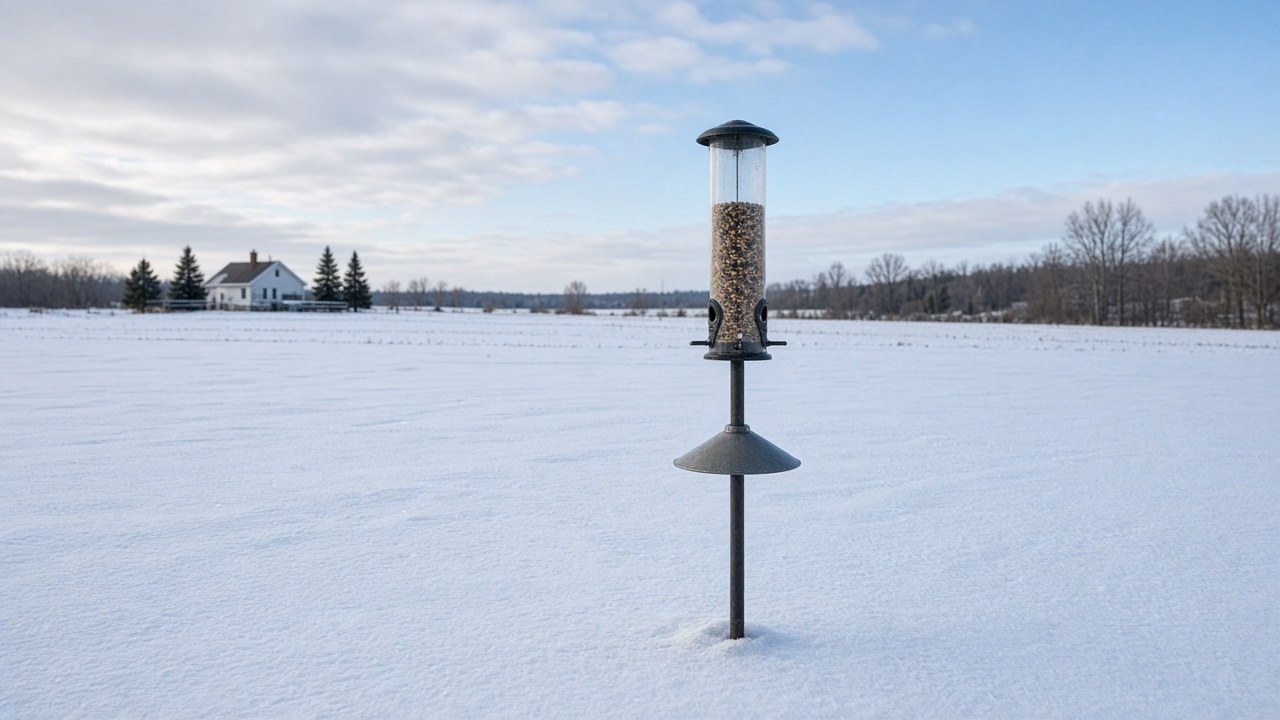
AI-generated image. A baffle under a pole-mounted feeder.
Problem
What the handbook says
Windows
A feeder within three feet of the glass keeps a bird from building speed if it hits the pane. Breaking up the reflection, with something on the outside of the glass, is the other half of the same advice.
Squirrels
On a pole, a baffle under the feeder is the usual block. Squirrels can still jump to a feeder that sits less than 10 feet from a tree or a building.
Cats
The handbook's advice is to keep the cat indoors. Birds on the ground, and young birds, are the ones most at risk under a feeder.
Water
Change the bath every day. Birds often prefer a bath at ground level, and a raised one still works. A branch or a stone in the water gives a bird a place to drink without soaking, which matters in the cold.
Cleaning
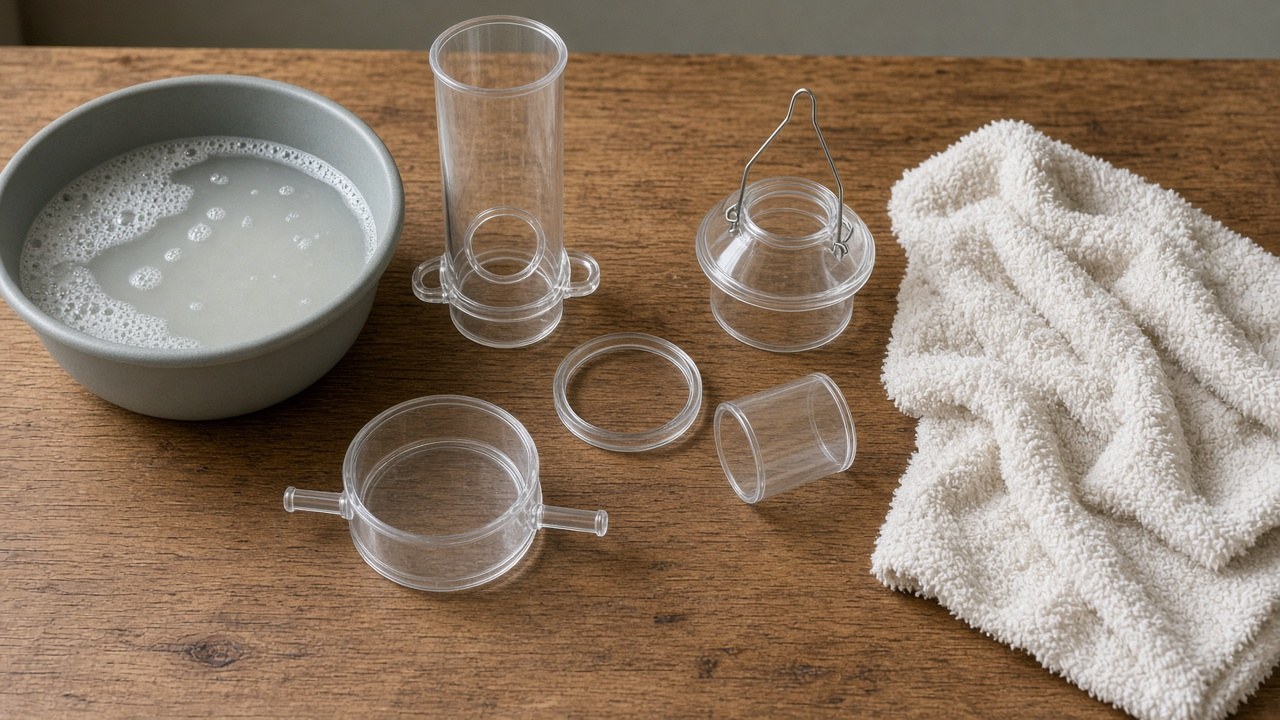
AI-generated image. Take the feeder apart before you wash it.
Clean about once every two weeks, and more often when the feeder is busy or the weather is warm and damp. Mold and droppings are the reason. Take the feeder apart. A hot dishwasher, soap and boiling water, or a dilute bleach solution will do. So will an hour in a weak vinegar solution, then a scrub with a bottle brush. Rinse it and let it dry completely before you refill it. Rake the seed hulls underneath. For nectar, wash the feeder every time you refill it.
Sources
FeederWatch Handbook, Project FeederWatch, Cornell Lab of Ornithology and Birds Canada. Seed, feeder types, nectar, placement, and cleaning.